Bulletin vs poster panel: what's the difference
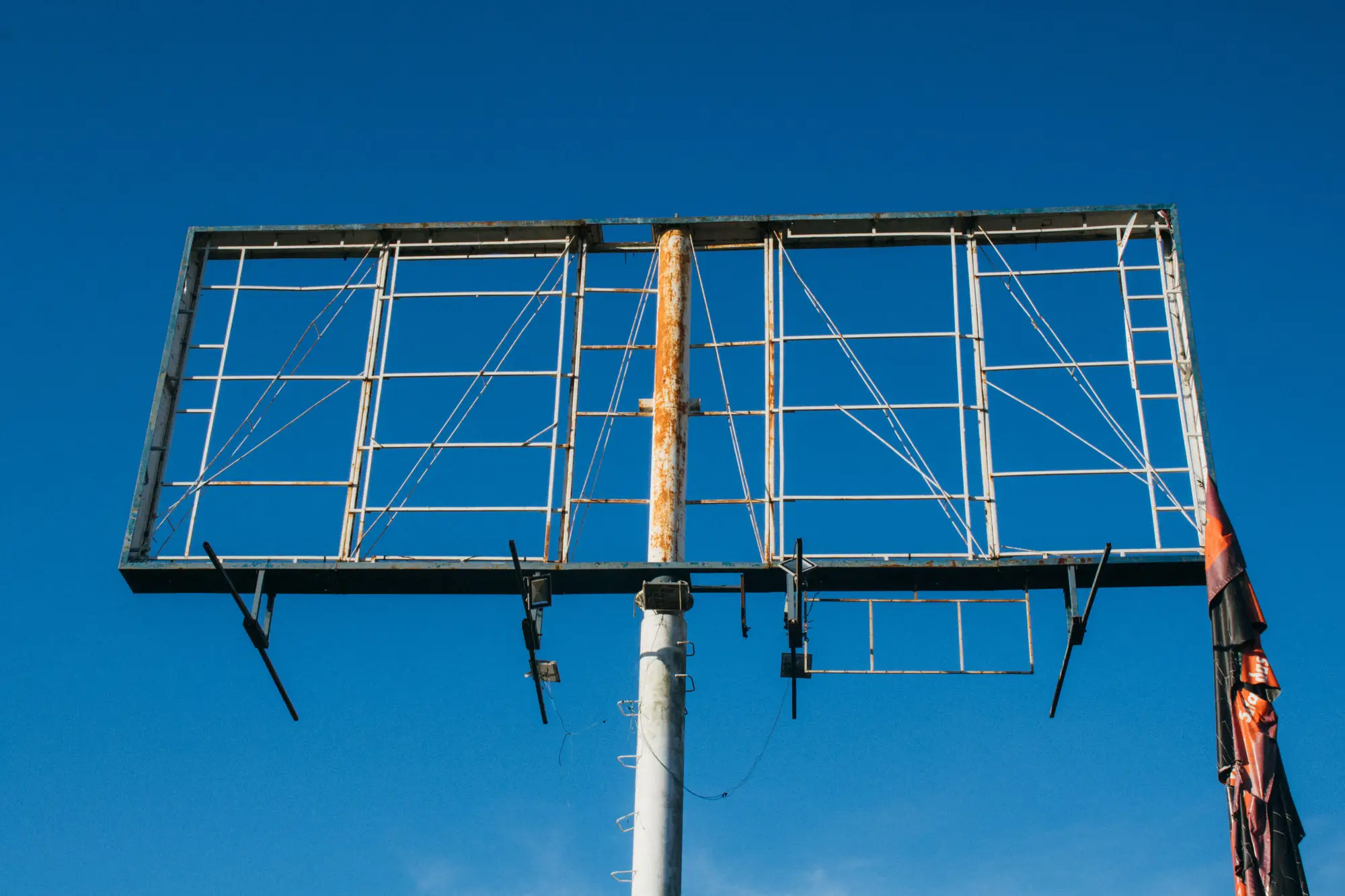
In the trade, "billboard" is just the word a customer uses. What matters for an audit is whether a face is a bulletin or a poster panel, since that distinction drives the lease term, the print spec, the crew that services it, and how much weight the face carries in a sales book.
Bulletins
A standard bulletin runs 14 feet by 48 feet. Some markets carry a mini-bulletin at 10.5 by 36, usually where the right-of-way won't support a full structure. Bulletins get built for distance: freeway frontage, wide arterials, anywhere a driver needs several seconds of read time before the exit or the light. Print is vinyl, wrapped and laced around the structure, or increasingly a digital face running a rotation.
Lease terms skew long, often a minimum of weeks running up to a full year for the better locations. Illumination is close to standard issue, since a bulletin facing nighttime commuter traffic without a light kit is leaving half its daypart on the table. These are also the faces that draw the most zoning attention, because height and size put them under whatever setback and spacing rules the jurisdiction has on the books.
Poster panels, 30-sheets, and the junior size down
A poster panel, still called a "30-sheet" in half the contracts you'll see, runs around 12 feet by 24 feet of print area. The name is a holdover from when the ad arrived as 30 individual sheets of paper, pasted up panel by panel. Almost nobody prints it that way anymore. It's a single vinyl or paper print now, but the trade name never updated, the same way a "film" shoot still gets called that with no film in the building.
Below the poster is the junior poster, the 8-sheet: smaller again, common on walk and transit corridors where the read distance is feet, not a quarter mile. Posters and junior posters tend to sell in network packages rather than as individual premium spots. A poster buy spreads reach across a market: more faces, each carrying less individual weight, clustered in higher density and rotated on a shorter cycle, typically monthly.
Why this split matters when you're auditing a region
When you're checking a book, your own or a competitor's, the bulletin/poster split tells you something before you've pulled a single rate card. Bulletins concentrate on the corridors that reward approach distance: the setback, the orientation relative to the lane, the angle a driver actually sees the face at. Posters concentrate on density, more faces per mile, each one carrying less individual weight, which is exactly why a competitor's poster count matters more in aggregate than any single location does.
It's also where windshield surveys get sloppy. A field rep clocking faces from a moving vehicle will log a large poster as a bulletin because judging true dimensions at 45 miles an hour is harder than it sounds, and a mini-bulletin tucked into a landscaped median gets missed entirely because it reads small from the angle the car happens to pass it. Those misclassifications don't show up until someone cross-checks the count against a permit file or a competitor's own sales map, by which point the audit's already been filed.
That's the gap Billboard Mapping is built to close: an early inventory layer for your region, built from imagery rather than a drive-by, that flags each detected face with its location, orientation, and rough approach visibility, so a bulletin doesn't get logged as a poster because of the angle someone happened to drive past it at.
If you're due for an inventory check this quarter, it's worth seeing what the early access list looks like before the next windshield survey gets scheduled.