How to read a billboard permit application
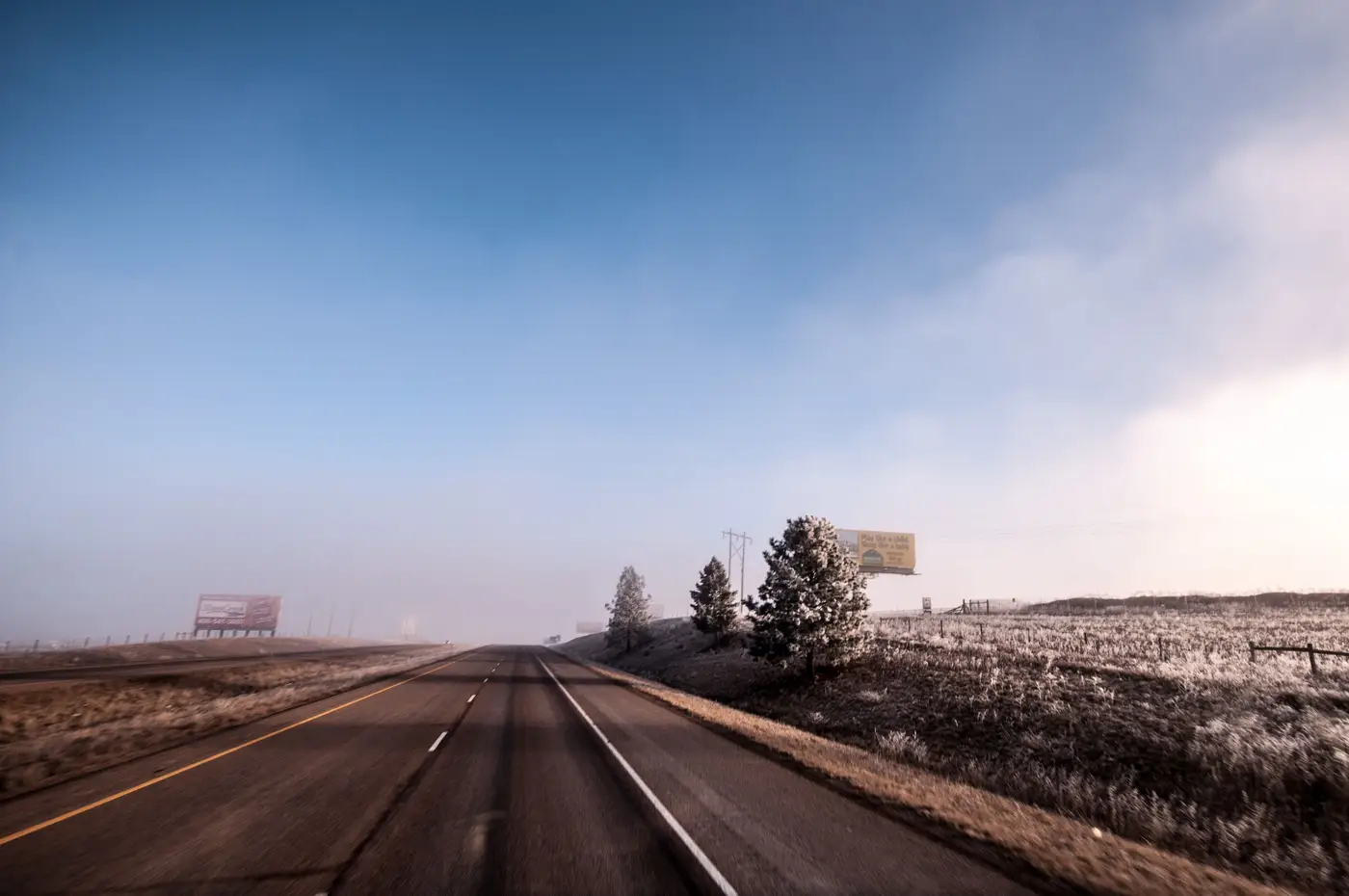
Pull a permit file from your state DOT and you'll get a stack of fields that don't map cleanly onto how you track inventory day to day. Here's what each one is doing, and where the paperwork and the physical structure stop matching up.
What's on the form
Most state outdoor advertising permit applications carry some version of the same fields: applicant name, property owner, parcel number or legal description, the highway or route the face is regulated against, distance from the nearest interchange or intersection, structure height and sign face dimensions, and a lighting designation (illuminated, non-illuminated, digital). Some states also ask for a spacing certification, confirming the proposed face meets minimum distance requirements from the next permitted structure in either direction.
None of that tells you orientation relative to traffic, or whether the face reads from the travel lane it's permitted against. Setback and height get you a rough sense of visibility, but a structure can meet every DOT dimension requirement and still sit behind a berm or a stand of trees that's grown in since the permit was issued. The application is a legal record of what was approved, not a survey of what a driver sees today.
Renewal applications are thinner. Once a structure is permitted, most states only require periodic renewal confirming the sign is still standing and in compliance, sometimes with a photo attached. That photo, when states bother to require and archive it, is often the closest thing to a current visibility check you'll find in the public record.
Permit number vs. structure ID: the field that trips people up
The permit number is tied to the application, not the steel. File a new application for a rebuild, a face change that alters dimensions, or a transfer of ownership, and you can end up with a new permit number attached to a structure that's been standing in the same spot for twenty years. Some states reissue a number on every renewal cycle; others keep one number for the life of the structure and just stamp renewal dates onto it.
A structure ID, where the state assigns one, is meant to be the persistent tag for the physical asset regardless of how many times the permit paperwork changes hands. Not every DOT runs both systems. Some states only have a permit number and treat it as the de facto asset ID, which works fine until a transfer or rebuild resets it and you lose the thread connecting old records to the current structure.
If you're reconciling your own inventory against DOT records, don't assume permit number continuity. Match on location and dimensions first, and treat the permit number as a pointer to the current authorization rather than a stable asset key. A structure's permit history showing multiple numbers over the years usually reflects rebuilds, face changes, and ownership transfers landing on the same steel.
Running a DOT lookup without wasting a day
Every state runs its own system, and the gap between them is wide. A few publish a searchable map or database you can query by route and milepost. Most require a records request, a mailed form, or a call to the regional office, and turnaround varies by how backed up that office is. Searching by owner name tends to be more reliable than searching by location, since location fields get entered inconsistently across decades of filings. If you know the route and approximate milepost, start there and narrow by dimensions once you have a results list.
None of this gets you a visibility check. DOT records exist to document regulatory compliance. They don't tell you approach visibility or orientation, which is the thing you're actually trying to answer when you're scouting a market or sanity-checking your own book.
That's the gap Billboard Mapping is built to narrow: a VHR imagery pass that flags detected faces across a region with location, orientation, and a rough read on approach visibility, pulled from imagery instead of a windshield survey or a stack of permit files.
If a records request is the slowest part of your inventory audit right now, it's worth seeing what an imagery pass turns up instead.